
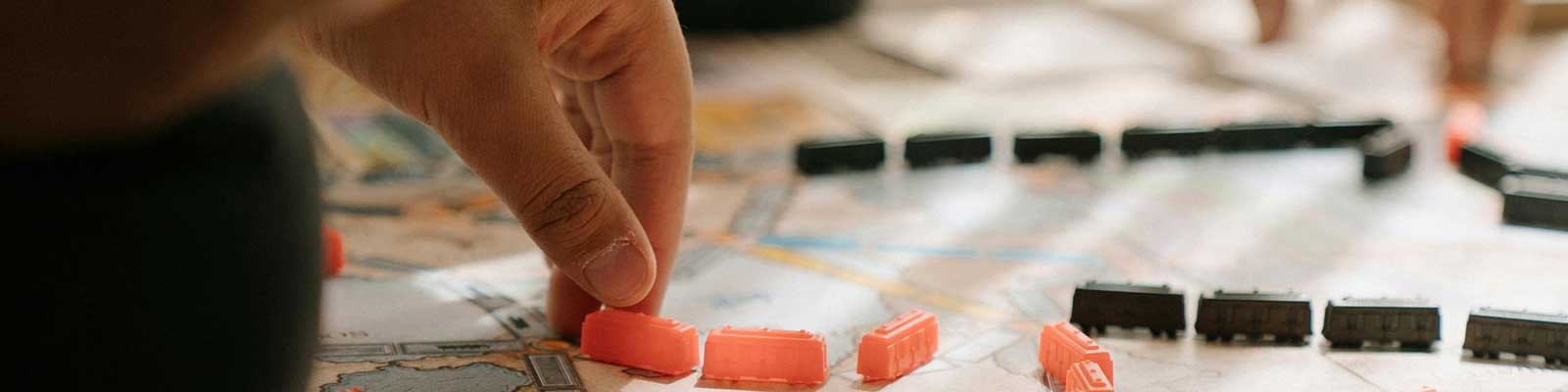
As my kids get older, family game night has had to grow up a little too. (Sure—every once in a while, we can still get away with Candy Land, but it’s definitely not the favorite it used to be.) One of our newer favorites is an interactive digital game. The game feeds us random scenarios that present some sort of a challenge, but the challenge is incomplete. Each player needs to fill in the blank with something that makes the challenge only appealing to SOME people.
So for example, it might ask, “You are offered the house of your dreams for free, but it comes with ___________________. Do you accept it?”
One of my sons filled in the blank with “a cockroach and spider infestation in the basement.”
Then every player has to vote yes or no on the scenario. The goal of the game is to present such a challenging situation that it divides the group perfectly in half: 50% yes and 50% no.
The game itself is super entertaining. But the thing that’s intrigued me even more than the game itself is how something that’s meant to divide us actually brings us together. We laugh so much about each person’s reason behind how they voted! And it’s really made us all pay closer attention to the likes and dislikes of our family.
Someone knows that brother A will almost always say yes to a situation involving bodily noises.
Someone else knows that brother B has zero fears about bugs.
Everyone knows that Dad will drop just about anything if there’s an opportunity to play music.
(I bet you’re starting to wonder what on earth this has to do with God, right?!)
I realized that the key to the game is being curious instead of being critical. Understanding each person’s unique preferences, fears, and passions gets you the win. It gives you insight into where they draw the line between deal-makers and deal-breakers. It helps you relate to others and appreciate them. Where criticism brings frustration and division, curiosity brings diversity and conversation.
What if we try being curious instead of critical when we first ask someone about their beliefs? What if authentic curiosity about someone else’s faith leads to a sincere, vulnerable conversation about life and death? What if curiosity makes someone feel genuinely loved? What if it leads them to wonder what your beliefs are? What if it gives you access to the opportunity to present this scenario: “You are offered the eternity of your dreams for free, but it comes with Jesus. Do you want to know more?”
Actually, Paul said it in a very similar way in the Bible (only much better):
Even though I am free of the demands and expectations of everyone, I have voluntarily become a servant to any and all in order to reach a wide range of people: religious, nonreligious, meticulous moralists, loose-living immoralists, the defeated, the demoralized—whoever. I didn’t take on their way of life. I kept my bearings in Christ—but I entered their world and tried to experience things from their point of view. I’ve become just about every sort of servant there is in my attempts to lead those I meet into a God-saved life. (1 Corinthians 9:19-23 MSG, emphasis mine)
So here’s the question: You are offered the opportunity to partner with God in the mission to make heaven crowded, but it comes with an attitude of genuine curiosity about people very different from you. Do you accept it?

When your dog dies
I got an email the other day from a family grieving the death of their dog. After nearly 15 years of companionship, their beloved…

Thirsty?
Have you ever wondered why it’s so hard to be satisfied? If you’re like me, living in a prosperous country, you have/own/enjoy more blessings…

Canceling Thanksgiving
I spoke recently with someone who works for a major airline. She said that flight cancelations around Thanksgiving have been staggering. I talked to…
About the Author
Emily Krill
Emily Krill is a faith-based blogger, Christian life coach, and speaker who challenges people to embrace a life of “messy worship” (a.k.a. an authentic relationship with God). She is also a wife, mother of five, and vocalist in a Milwaukee-based Christian contemporary band with her husband and several friends. Emily enjoys cheesecake, coffee, and daily trips to Aldi.