
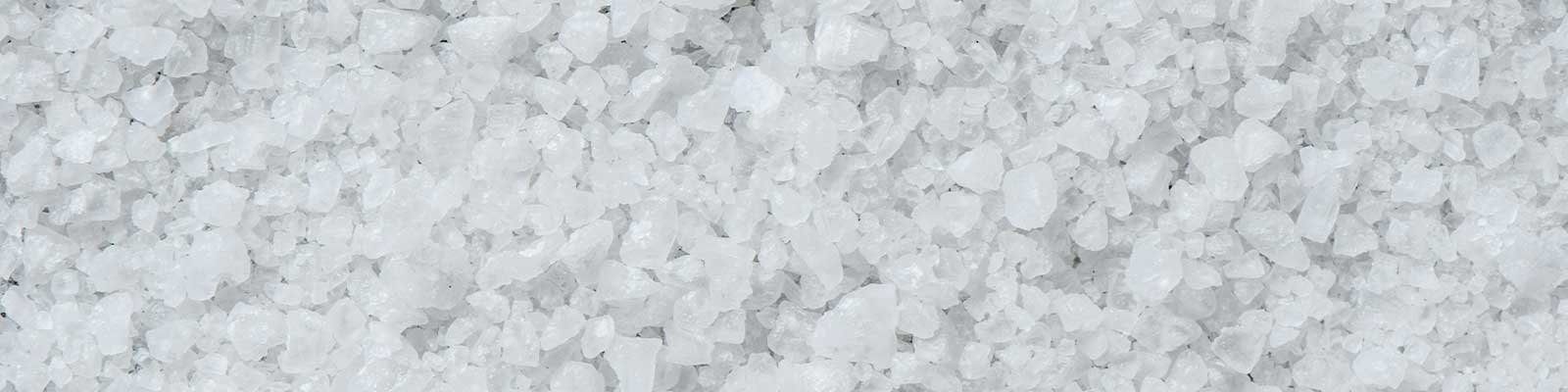
I’ve lived in the Midwest my whole life. This means that I have a complicated relationship with salt. On the one hand, I am grateful that the roads are heavily salted so my children don’t end up in a ditch on a snowy night when they inevitably attempt one too many doughnuts. On the other hand, I’ve seen what the salt does to our vehicles; our trusty 1999 Camry would have kept running for several more years had the chassis not entirely rusted away because of its several winters in these parts. RIP Rosita.
Salt is a big part of our lives, from flavoring our foods to making our roads less slippery. But salt was an even bigger part of the lives of those in Bible times. Did you know that salt is mentioned over forty times in the Bible, in both the Old and New Testament? As I stomped off the salt from my shoes onto the already well-seasoned welcome mat this morning, I thought I’d explore the different ways that salt is used in the Bible and see if we can look at salt a little bit differently this year.
- Salt was a preservative and a purifier. Before the days of electricity and freezers, there was salt. Salt preserved and purified. Salt sustained life. Salt also added flavor.
“Let your conversation be always full of grace, seasoned with salt, so that you may know how to answer everyone” (Colossians 4:6).
As Christians, we are called to flavor and preserve relationships on earth so that we may point others to Jesus, the ultimate preserver of our lives and faith. In the Bible, salt was a symbol of friendship and loyalty. God even talks about a “covenant of salt”:
“Whatever is set aside from the holy offerings the Israelites present to the Lord I give to you and your sons and daughters as your perpetual share. It is an everlasting covenant of salt before the Lord for both you and your offspring” (Numbers 18:19).
Everlasting! For the Israelites. For us. For our kids and our grandkids. Preserved. Sustained. By the grace of God and the sacrifice Jesus made by dying for our sins. Through his actions, he preserved and purified our relationship with him forever. He is the great Saltshaker. Although that’s not one of the names we associate with Jesus, like Prince of peace, Messiah, and Immanuel, I think it works.
- Salt was valuable. White gold. A treasured commodity. Used as payment. The word salary actually has its origins in the Latin word sal/salt because of the allowance Roman soldiers were given. Wars have been fought over salt because it was expensive and indispensable. People back then would be appalled to see salt trucks dumping this precious commodity willy-nilly over highways, spilling it into ditches. Because salt was valuable. In the Old Testament, salt made the Israelites’ offerings more precious to the Lord.
“Season all your grain offerings with salt. Do not leave the salt of the covenant of your God out of your grain offerings; add salt to all your offerings” (Leviticus 2:13).
“Then the Lord said to Moses, ‘Take fragrant spices—gum resin . . . and make a fragrant blend of incense, the work of a perfumer. It is to be salted and pure and sacred’” (Exodus 30:34–35).
Salt was costly, and it was set aside to make offerings to the Lord. We don’t make grain offerings on big altars at the temple anymore, but we could stand to think a little more about what we do offer up to God. How can we add a little more “salt” to our worship? How can we be a bit more valuable to the kingdom? What talents and treasures do we have that we could dedicate to God and to others?
In the Sermon on the Mount, Jesus recalled the people to those early offerings when he said this:
“You are the salt of the earth. But if the salt loses its saltiness, how can it be made salty again? It is no longer good for anything, except to be thrown out and trampled underfoot” (Matthew 5:13).
We are seen and loved by God as valuable. And he has given us a calling: We are to be salt of the earth! Not thrown out to be trampled on the roads but to be white gold for God’s kingdom.
So with all this in mind, the next time you shake the salt off of your boots, perhaps you can be reminded of the goodness and symbolism of those little white crystals. Don’t pass on the salt.

Don’t be you
One of the most offensive things Jesus ever said was, “Whoever wants to be my disciple must deny themselves and take up their cross…

Audience of one
In Judges 3 after the story of Ehud (who is like a Special Forces operative in the Old Testament), there’s a short mention of…

Dads on duty
At Southwood High School in Shreveport, Louisiana, 23 students were arrested over the course of three days due to violent fights. About 40 dads…
About the Author
Missy Martens
Missy lives in Green Bay, Wisconsin, with her husband, Jon, where they own and run Copper State Brewing Company. She homeschools their four active children, oftentimes at the brewery, and they somehow keep learning in spite of her. Missy loves witty banter, adventures of all sorts, and coffee . . . lots of coffee. And Jesus . . . lots of Jesus.